
Episode that took place in 2019 reaches another year without proper responsibility
On August 30, 2019, the country witnessed what would be a milestone in the disastrous environmental performance of the past government. On that date, several oil slicks reached the coast of Paraíba. The compound affected the local fauna and flora, contaminating several species. The economy and the health of the population also suffered as a result.
The oil, which affected 130 municipalities spread across 11 coastal states, contaminated more than a thousand locations. Among them were more than 50 environmental conservation units. At the time, current federal deputy Ricardo Salles (PL) was in charge of the Ministry of the Environment. He was the one who wanted to “pass the buck” on environmental issues while the media was preoccupied with Covid-19 and last Monday, 28, Bolsonaro’s former minister became a defendant, through a complaint by the Federal Public Prosecutor’s Office, accused of being part of a criminal organization with a “serious scheme to facilitate the smuggling of forest products”. In addition to Salles, the former president of IBAMA, Eduardo Bim, and 21 other people are also defendants.
To investigate who was responsible for the oil spill, the Oil Commission was set up in 2019. The commission was interrupted due to the Coronavirus pandemic and only resumed in 2021, when it was closed without a final report defining the culprits. This year, MPs submitted a request to extend the CPI, but the ruling base at the time of the spill worked together to prevent it from moving forward.
In December 2021, the Federal Police named the Greek oil tanker Bouboulina, owned by Delta Tanker, as the culprit in the spill. The owners of the company, the ship’s captain and chief engineer, were charged with pollution, failure to comply with environmental obligations and damaging conservation units.
The government’s failure to act to contain the worsening problem was evident. There was a long delay in implementing the National Oil Incident Contingency Plan (PNC). After the first reports of oil appearing on the beaches of Paraíba, the chronology was as follows:
- September 25, 2019: IBAMA issues the first official note on the stains. By then, 108 locations had already been affected.
- October 05, 2019: Ricardo Salles, via social media, makes his first mention of the case.
- October 11, 2019: The operational coordinator is activated by Salles to monitor the situation, this is the first act of the PNC. There were 155 sites affected.
- October 14, 2019: First mention of the Monitoring and Evaluation Group (GAA). Composed of Ibama, the Navy and the ANP.
The negligence and delay in reaction was so great that the population, along with civil society organizations, had to mobilize to clean up the toxic waste on the beaches and protest. Many families and businesses whose livelihoods depend on the coast – such as fishermen and shellfish gatherers – worked to do this, as their livelihoods were under threat. Tourism was hit hard by the pollution. People didn’t have the minimum Personal Protective Equipment (PPE) to help with their work. According to IBAMA, the health of 144,000 artisanal fishermen in the Northeast was at risk. Outside of these figures, the states of Espírito Santo and Rio de Janeiro were also affected.
Direct contact with crude oil can cause skin problems, breathing problems, headaches and vomiting. The Federal Chemistry Council said in an official statement that:
“The polyaromatic hydrocarbons (PAHs) present in crude oil and its derivatives belong to a group of semi-volatile organic compounds that are among the most toxic compounds in oil in this state and can cause serious health problems, such as cancer”.
Four years on, the situation still has no definitive answers. The tragedy left major consequences for the coastal population and for Brazil’s fauna and flora. In addition, the Federal Police estimated R$525.3 million in damages caused by the oil spill.
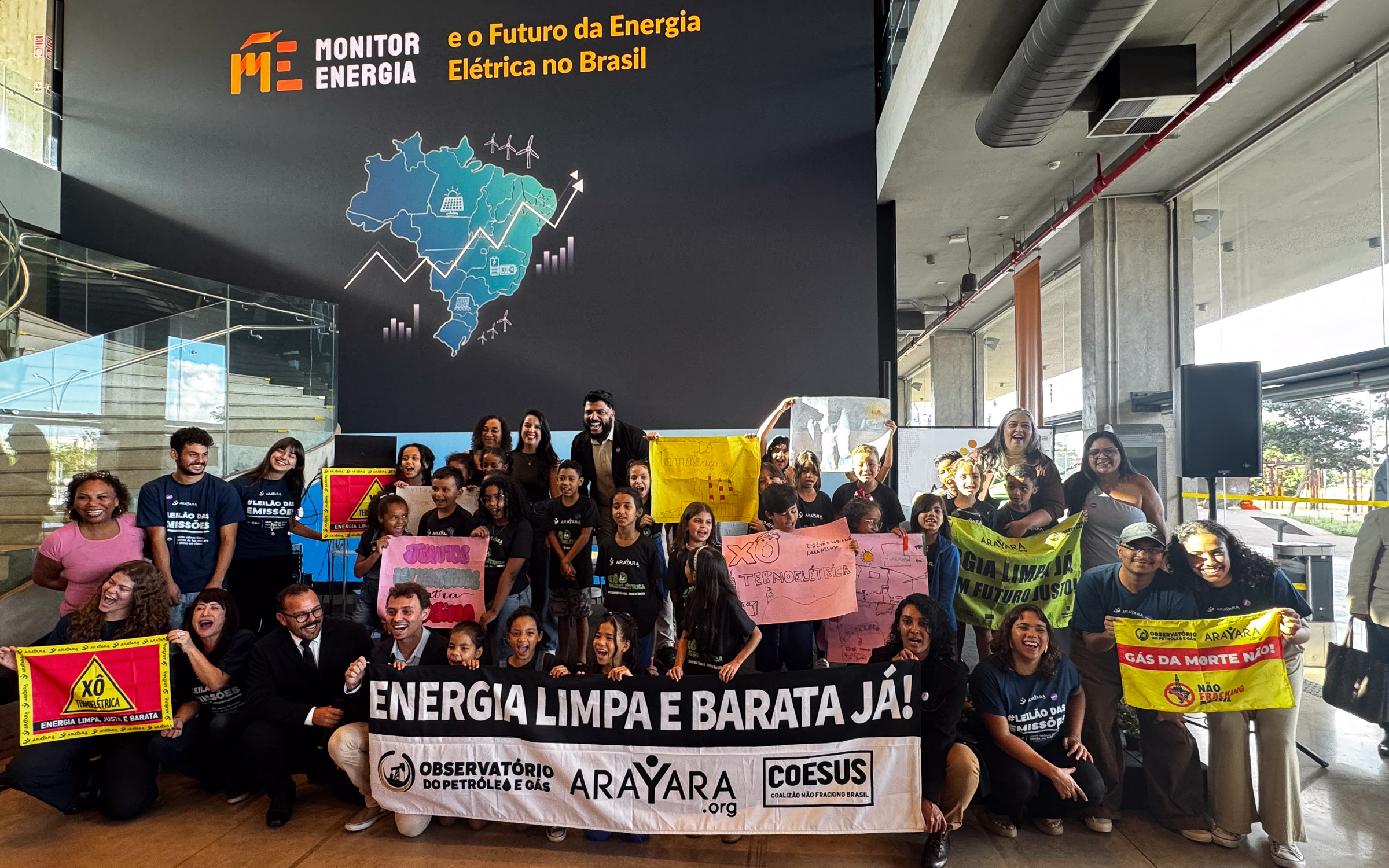
The ARAYARA International Institute and other civil society organizations came together to help the affected communities. Even today, studies are being carried out and published in various scientific journals to assess the consequences of the spill. As long as oil companies are not held accountable and there is no serious analysis of how to reduce the use of oil and gas in the world, situations like the one seen in 2019 will continue to happen.
The year after the tragedy on the northeastern coast, ARAYARA joined more than 120 organizations in calling for the cancellation of an auction of oil and gas exploration areas in Brazil. The auctions promoted by the ANP continue to offer sensitive areas to this day. They are expanding their offers in complete disregard of public hearings, scientific arguments and the protests of people whose lives are at risk. ARAYARA has already managed to withdraw hundreds of blocks from these auctions through Public Civil Actions (ACP’s), but the fight continues!
There is currently pressure to start oil exploration at the mouth of the Amazon River, including a favorable opinion from the Federal Attorney General’s Office (AGU). IBAMA and the Ministry of the Environment have already stated that without an Environmental Assessment of the Sedimentary Area – AAAS – the operating license will not be granted. The ARAYARA International Institute continues to fight to prevent the oil blocks off the Amazon coast from being exploited, as well as various sensitive areas from north to south, such as the paradisiacal Fernando de Noronha and Florianópolis.
ARAYARA stresses that oil belongs underground. We cannot allow situations like the one in 2019 to happen again, because as well as visible pollution, the planet is suffering from the climate crisis made worse by the burning of fossil fuels. What Brazil needs is a Just Energy Transition to gradually replace polluting sources and turn the country into a model of sustainable development. Watch the video published by ARAYARA to remember the case.