
Climate change monitoring groups say that Brazil’s upcoming oil and natural gas block auction will help increase CO2 emissions, a direct contradiction to the country’s climate agenda.
The auction, to be held on 17 June,will offer permanent concessions for 332 blocks, including several in the Amazon basin. Burning resources from these blocks could release more than 11bn metric tonnes of CO2 equivalent (tCO₂e), which exceeds the agribusiness’ sector emissions over the past six years, according to non-profit climate change institute Climainfo and greenhouse gas tracking platform SEEG data. The agribusiness sector is one of the main CO2 emitters in Brazil, accounting for around 27pc of all of the country’s emissions in 2023, according to SEEG.
The environmentally-sensitive Foz do Amazonas offshore basin, along with other six Amazon sedimentary basins included in the offer — Parecis, Solimoes, Amazonas, Parnaiba, Barreirinhas and Para Maranhao — contain reserves of 69bn bl of oil equivalent. If exploited, these fossil fuels could release 24bn tCO₂e, nearly half of all global emissions in 2023, according to non-profit transition energy global network Fossil Fuel Treaty.
Conflicting agendas
The climate groups and other environmentalists argue that the upcoming auction highlights Brazil’s contradictory stance on oil production and the fight against climate change.
President Luiz Inacio Lula da Silva has spoken in favor of oil production several times — even clashing with environmental watchdog Ibama over a delay to award permits to drill the equatorial margin — despite also positioning himself and the country as a leaders in the fight against climate change.
Brazil is one of the few G20 members that has unveiled NDCs under the Paris climate agreement, although some climate groups accuse them of lacking ambition. The country set a target of reducing its greenhouse gas emission (GHG) by 59-67pc below 2005 levels by 2035, which represents around 850mn-1.05bn tCO2e, according to the government.
But many environmentalists find those two positions to be contradictory. “Brazil now has the chance to lead by example by suspending the auction and show the world…that it is ready for a just, sustainable, and fossil-free future,” senior campaigner at nonprofit environmental advocacy organization Stand.earth Gisela Hurtado said.
“The auction of new oil blocks in the Amazon must be canceled now,” according to Mauricio Guetta, director of law and public policy at climate change NGO Avaaz, adding that the issue is “a matter of justice for indigenous peoples and the forest.”
“We need a global agreement to phase out oil extraction in a fair and just way,” Fossil Fuel Treaty’s campaign coordinator Clara Junger said. “In the meantime, the bare minimum is to stop the expansion [of production].”
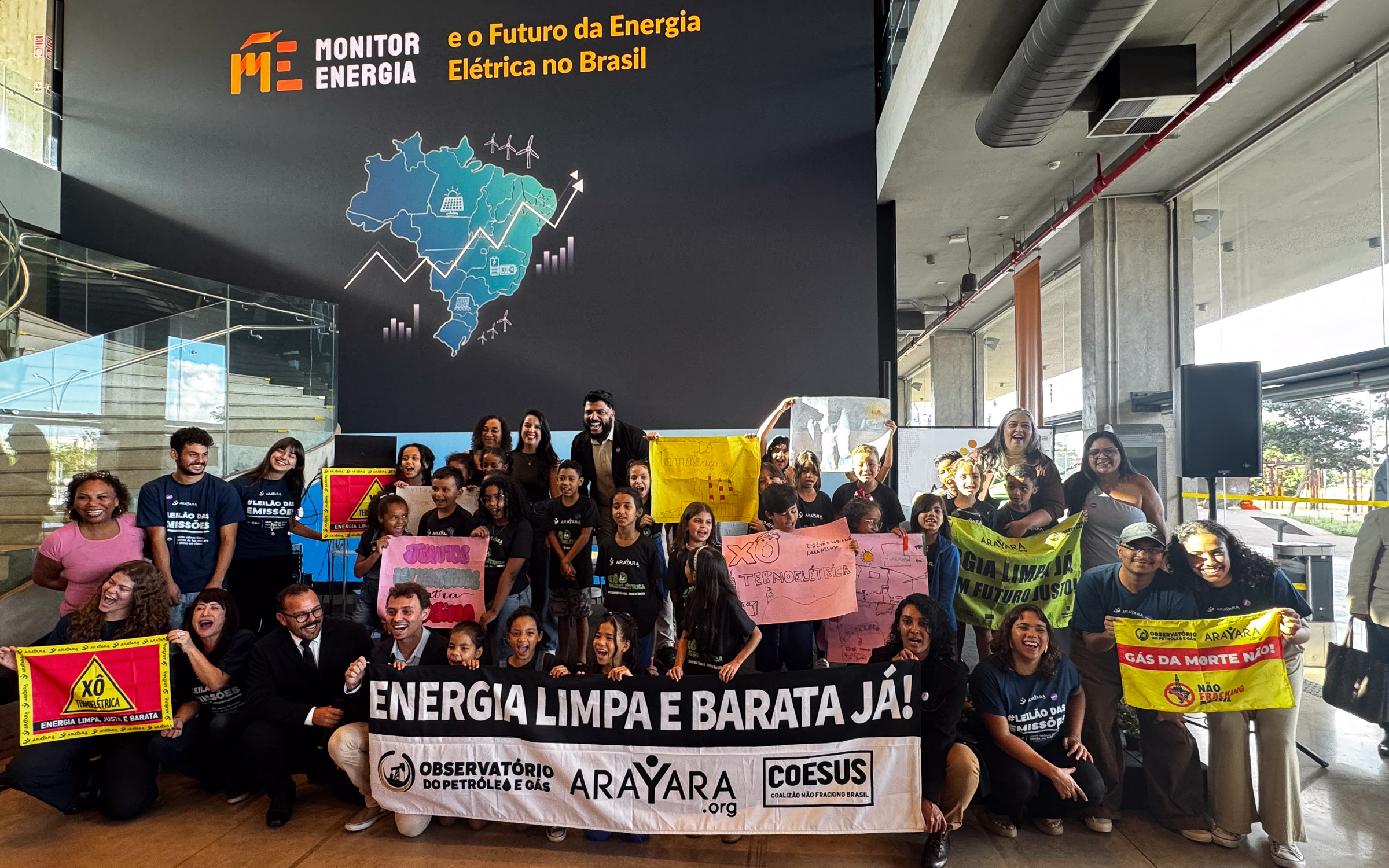
The federal prosecutor’s office in Brazil’s Para state recommended suspending the 17 June auction, or at least the exclusion of the Foz do Amazonas blocks. And climate institute Instituto Arayara also filed lawsuits challenging the bidding round. But the challenges were ignored and the auction will go ahead as planned.
Brazil’s oil production will peak at 5.3mn b/d in 2030, a 47pc rise from 3.6mn b/d in 2024, according to the government’s 10-year plan for energy expansion.
Indigenous groups worry, too
Indigenous groups are also speaking out against oil exploration in Brazil and plan to use the auction and the upcoming UN Cop 30 climate conference — to be held in Para, in November— to also protest fossil fuel extraction in Foz do Amazonas.
The initiative — led by the Coordination of Indigenous Organizations of the Brazilian Amazon (Coiab) with support from the Articulation of Brazil’s Indigenous Peoples (Apib) and the International Coalition of the Indigenous Amazon — is pleading for a “just energy transition that prioritizes community-based renewable energy instead of predatory projects in its delimited territories.” Other statements include pleas for an “official international commitment” to recognize indigenous lands as climate mitigation policies, direct access to climate resources from indigenous organizations and funds to ensure autonomy, protection of voluntary isolation.
The group drafted a declaration — signed by entities representing more than 300 Brazilian indigenous groups as well as 28 segments of traditional communities and indigenous organizations of the Amazon basin — that will be presented at the Bonn climate conference next week. It is also planning protests during the 17 June auction.
Brazil’s NDC also commits to improving territorial, indigenous and environmental monitoring, the groups say.
By João Curi
Fonte: Argus