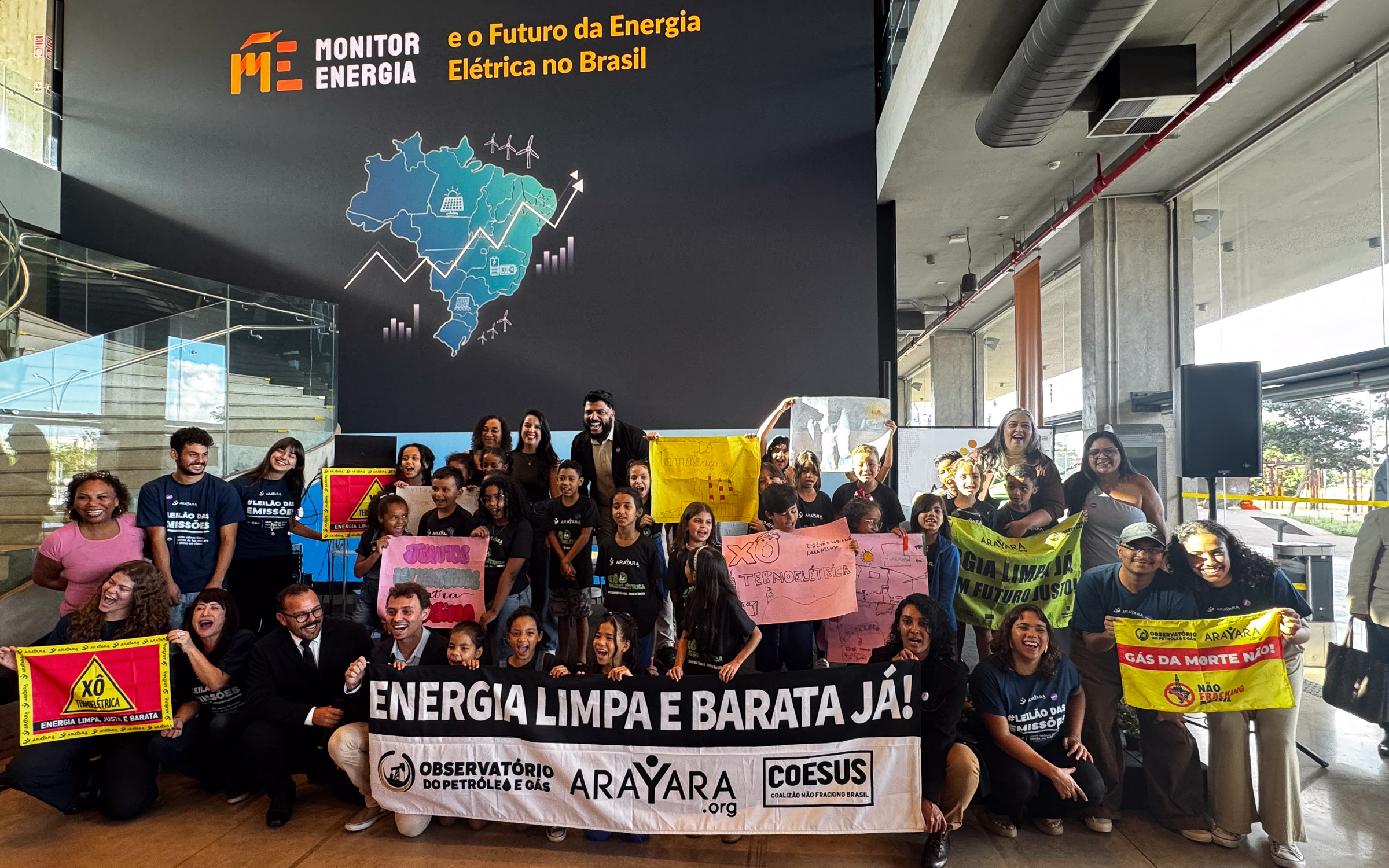

The Brazilian government is preparing to stage an oil exploration auction months before it hosts the Cop30 UN climate summit, despite opposition from environmental campaigners and Indigenous communities worried about the environmental and climate impacts of the plans.
Brazil’s oil sector regulator, ANP, will auction the exploration rights to 172 oil and gas blocks spanning 56,000 square miles (146,000 sq km), an area more than twice the size of Scotland, most of it offshore.
The “doomsday auction”, as campaigners have called it, includes 47 blocks in the Amazon basin, in a sensitive area near the mouth of the river that fossil fuel companies consider a promising new oil frontier.
The auction is key to Brazil’s plans to become the world’s fourth-largest oil producer, an ambition supported by the president, Luiz Inácio Lula da Silva, who argues that oil revenue will bring economic development and fund the energy transition.
But a wide range of groups, including environmentalists, federal prosecutors and even oil workers’ unions, are pushing for the bidding round to be called off, citing inadequate environmental assessment studies, the violation of Indigenous rights and the incompatibility of increased oil production with Brazil’s climate commitments.
The International Energy Agency says the development of new oil and gas fields is incompatible with global efforts to reach net zero emissions by 2050.
Brazil’s Instituto ClimaInfo has calculated that the burning of oil and gas from all 172 blocks on offer, should they move forward to production stage, could lead to the release of more than 11bn tonnes of CO2 equivalent – similar to more than six years’ worth of emissions from the country’s polluting agribusiness sector, or 5% of the emissions humanity can still produce to keep global heating to within 1.5C.
The areas in the Amazon basin alone could release 4.7bn tonnes of CO2 equivalent.
“This auction is posing really serious and grave threats for biodiversity, communities and climate,” said Nicole Figueiredo de Oliveira, the executive director of Instituto Internacional Arayara, a civil society organisation that has filed five lawsuits against next week’s auction.
Many of the oil exploration blocks on offer have outdated or near-expiry environmental assessment studies. Some overlap with Indigenous territories or conservation areas, including marine reserves around the island paradise of Fernando de Noronha. Arayara also argues that the ANP has failed to transparently assess the true scope of greenhouse gas emissions from exploration and possible future production of oil and gas in these areas.
The Amazon basin is at the centre of the debate surrounding the future of oil exploration in Brazil. The state-controlled oil company, Petrobras, has spent years trying to obtain an environmental licence to drill there, and Lula has put pressure on the environmental watchdog, Ibama, to deliver the permit.
Areas that would be affected by offshore drilling and related activities onshore include sensitive coral reefs, and Indigenous communities who say they have not been properly consulted.
“We Indigenous people are being flattened by this process, we’re not being seen or heard,” said Edmilson Oliveira, a coordinator of a group of Indigenous leaders who publicly oppose exploration activities off Brazil’s northern coast.
Lucas Louback, a campaign and advocacy manager at Nossas, one of the organisations demanding the cancellation of the auction, said: “Thousands of people are already saying no to oil exploration in the Amazon basin and the Brazilian government needs to listen. Just a few months away from hosting Cop30, continuing to bet on oil is a glaring contradiction.
“The Amazon is dangerously close to a tipping point, and clinging to this model pushes Brazil and the world closer to climate collapse.”
Fonte: The Guardian
Photograph: The Guardian/ Bloomberg/Getty Images