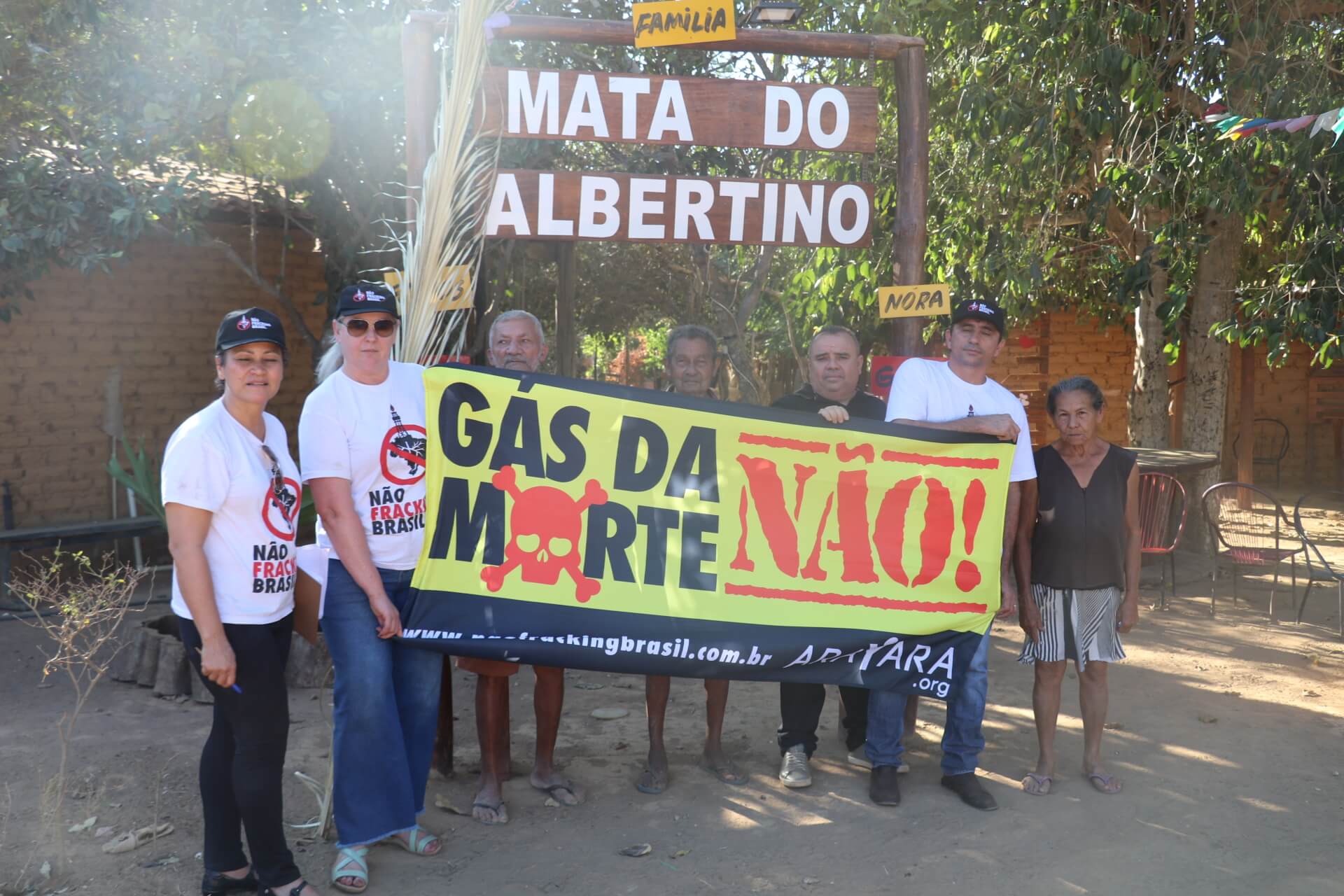
No Fracking Brazil team visited the Mata do Seu Albertino and Mata das Tabocas to take statements from the residents
What is fracking?
Fracking – also called hydraulic fracturing – is a process that involves injecting large volumes of water, chemicals and sand at high pressure into layers of rock underground to release trapped natural gas. Although it is a technique already in use in several countries, it is controversial for causing environmental and ecological damage, including groundwater contamination, release of greenhouse gases, induced earthquakes, etc.
Water scarcity is a reality faced by many communities in Brazil. However, in places like Mata das Tabocas and Mata do Seu Albertino, located in São João dos Patos, Maranhão, the lack of water reaches alarming levels and has caused a significant rural exodus, with former residents seeking better living conditions. The team from COESUS – Coalition No Fracking Brazil for Water and Life, a campaign of the Arayara International Institute, was present in the communities on September 13, 2022 to interview and make recordings in order to understand the reality faced by local residents.
One of the residents of Mata das Tabocas, Mrs. Balbina, told the COESUS team about the difficulty of living without water:
“Meus meninos vieram semana passada e não tinha água nem para lavar as mãos”, lamentou ela.
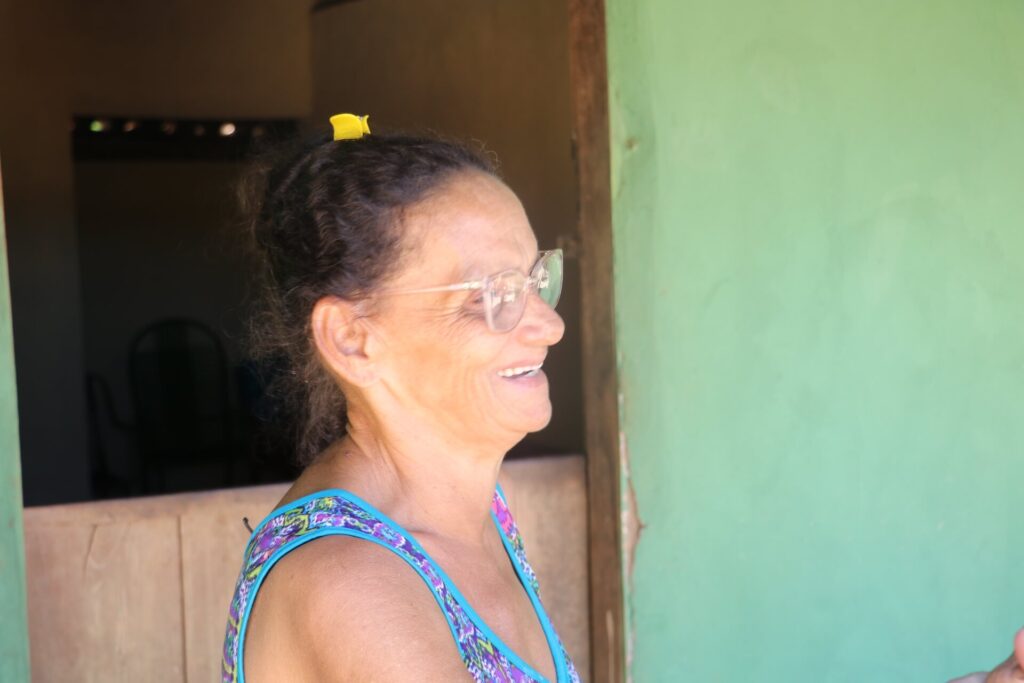
Dona Balbina, moradora da Mata das Tabocas.
Enquanto empresas petrolíferas manifestam interesse em instalar o fracking na região, técnica que consome milhões de litros de água potável, histórias como a de Dona Balbina se tornam cada vez mais comuns nas áreas que foram leiloadas para essa prática.
As petrolíferas escolhem regiões que já enfrentam intensamente a crise climática e o racismo ambiental, pois assim conseguem operar com mais facilidade, passando despercebidas pelo governo e pela mídia. No entanto, a população local, que sofre diretamente com as ações dessas empresas, não se cala e se posiciona firmemente contra o fracking, rejeitando o chamado “gás da morte”.
Environmental racism occurs when the population of a given region is disproportionately harmed by the installation of polluting industries or by extractive activities that compromise the environment. These communities, usually composed of low-income people and minority ethnic groups, face negative environmental impacts in their daily lives, from water and soil contamination to degradation of health and quality of life.
Mrs Sebastiana, another resident of the forest, showed her house and explained how the water catchment system works through cisterns and how it has evolved over time. In the past, water was stored in holes dug in the ground, exposed to the soil. Over the years they started using tarpaulins to cover the hole, and more recently they have started using cisterns, which collect the rainwater that runs off the roof. However, it is important to note that the region faces long periods of drought, practically without rain during several months of the year. Mrs. Sebastiana’s family is aware of the research being done to exploit the gas from fracking.
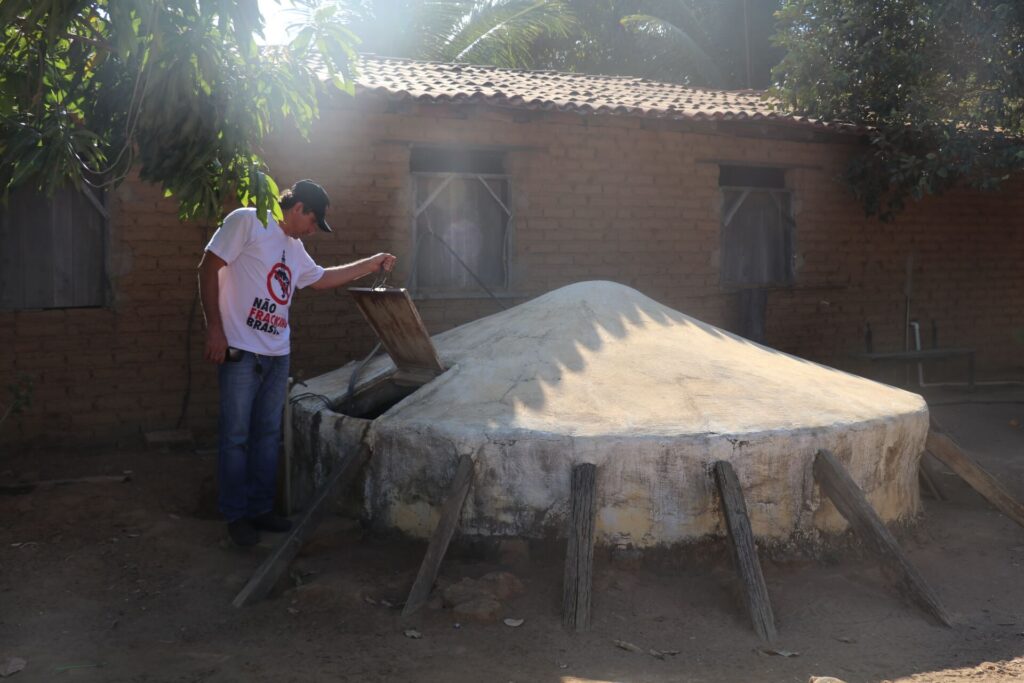
Member of No Fracking Brazil seeing the cistern functioning.