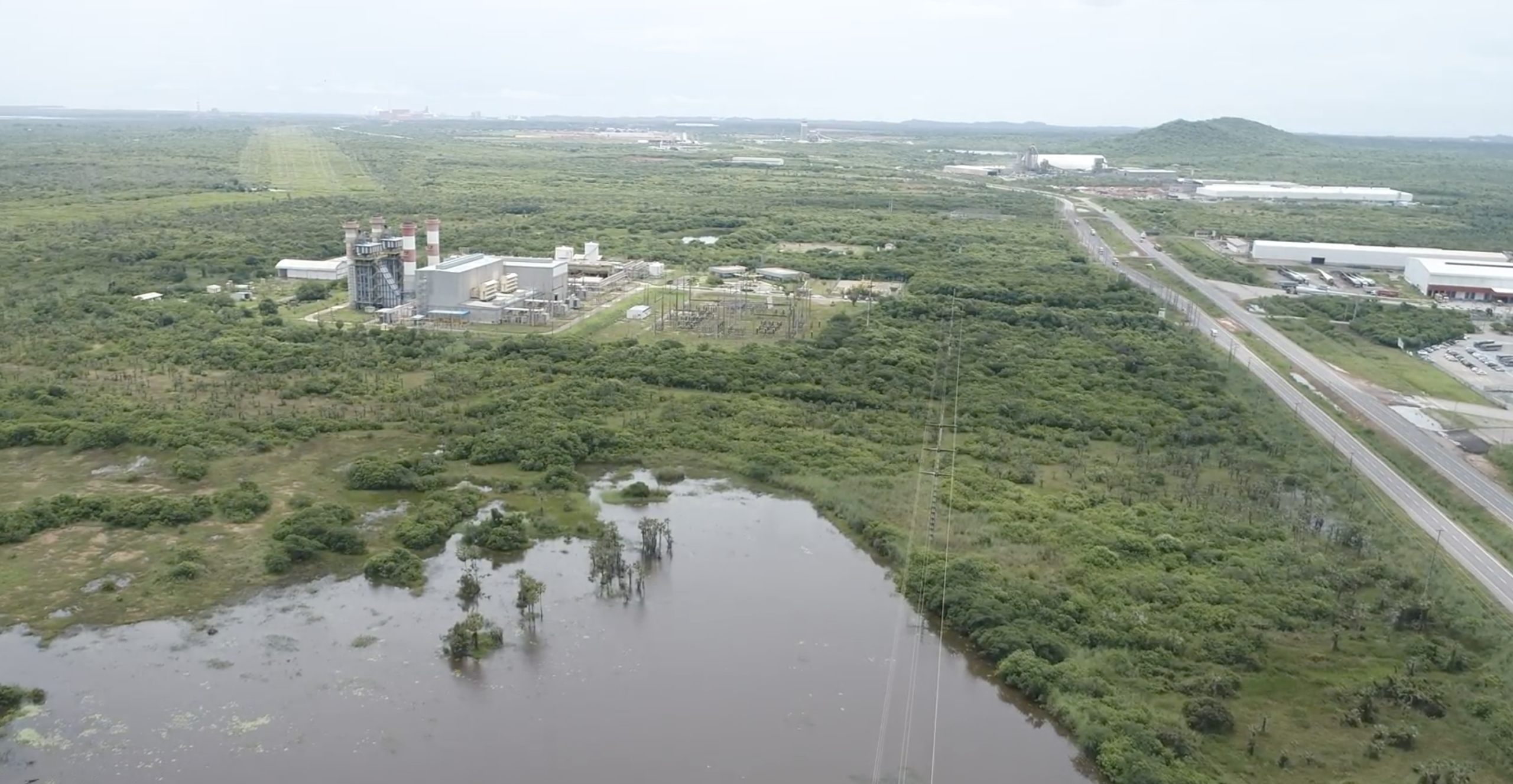
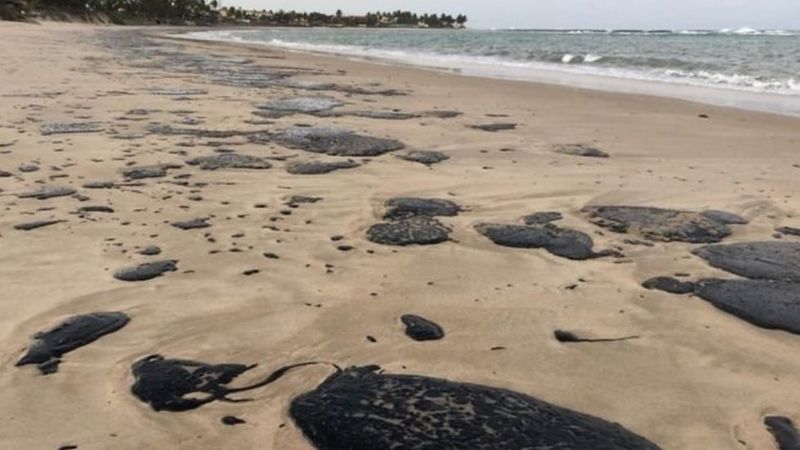
Photo: Oil spill in 2019 (UERN)
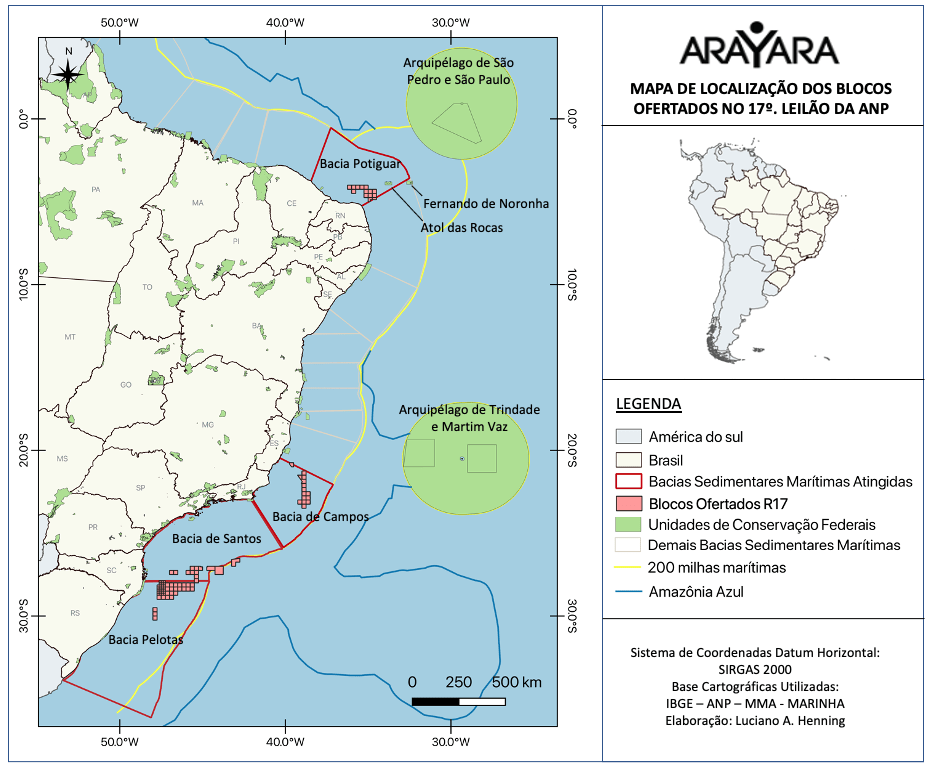
After months of fighting against oil exploration that would put the entire coast of Santa Catarina (south of Brazil), its biodiversity and population at risk, the Pelotas Basin was removed by the Federal Court from the blocks of the 17th Bidding Round for exploration and production of oil and natural gas of the National Agency of Petroleum, Natural Gas, and Biofuels (ANP).
Judge Marjôrie Cristina Freiberger, from the 6th Federal Court in Florianópolis (Santa Catarina’s capital), released the preliminary injunction to exclude blocks from the Pelotas Basin. Blocks in the SP-AP1 and SP-AR1 sectors should be excluded until the Environmental Assessments of Sedimentary Areas (AAAS) are prepared.
The decision meets the request of the Arayara International Institute, in a public civil action (ACP) against the Union, the State of Santa Catarina and the National Agency of Petroleum, Natural Gas and Biofuels (ANP).
“The decision of the 6th Court is in line with the understanding that oil exploration must be carried out safely and in compliance with all environmental regulations and good exploratory practices – which has not been done with these blocks in the 17th Round. The ANP has failed to provide due care and responsibility in offering blocks in areas such as the Potiguar and Pelotas basins, which present enormous risks to the environment, economic activities and the climate emergency that have been mobilizing the entire planet” , highlighted Dr. Eng. Juliano Bueno de Araújo, technical director of the Oil and Gas Observatory.
Initiatives against the 17th Round
Since the first – and only – public hearing about the 17th Round, the Arayara International Institute and the Oil and Gas Observatory, with the support of Não Fracking Brasil Coalition and the Climate Observatory, have been developing studies and actions to suspend the auction.
In addition to providing the ACP and presenting a technical report that points out the risks and inconsistencies of the round, Arayara had the support of councilors, deputies, fishermen and various sectors of civil society against the irresponsibility and setback that the exploitation of fossil fuels and their risks – at a time when the world is discussing the climate emergency and the search for new sustainable energy solutions.
The number of blocks excluded from the auction – almost 50% of the blocks offered – guarantees a massive reduction in future fossil emissions, since millions of liters of oil will no longer be explored.
The injunction also guarantees Arayara wide, unrestricted and effective participation in the public sessions about the 17th Round and determines that every public session is recorded and transmitted in real time to interested citizens.
According to the judge, the decision to keep the blocks in the Pelotas Basin in the 17th Round “was a public policy choice that restricted, without the necessary technical basis, the fundamental rights to an ecologically balanced environment and to health. In this sense, the mention of ‘instruments that oblige companies to implement preventive and mitigation measures for environmental impacts’ is insufficient, without due observance of the rules of prevention and environmental protection”.
For Freiberger, “both exploratory activities and an eventual accident can cause irreparable damage to the biological diversity of ecosystems present in the marine and coastal environment. The possibility of irreversible damage further reinforces the application of a precautionary principle, in order to remove the blocks identified by the technical study from the bidding process, given the predictability of occurrence of such damage. Notwithstanding the contractual provision for the winning companies to undertake to indemnify the losses, this will only represent monetary compensation – significant, certainly –, but the environment will never be recovered”.
Technical analysis were ignored
The Rocker law firm, together with technicians from the Arayara Institute, the Oil and Gas Observatory, with the participation of COESUS and the Climate Observatory, understands the Federal Court’s decision-making framework, which includes precaution and due care and technical surveys which were not proposed and carried out by the Ministry of Mines and Energy (MME), by the ANP, nor by the Ministry of the Environment (MMA).

The ANP disregarded the technical opinion of environmental entities such as ICMBio and IBAMA, regarding the high risk of contamination of the basins included in the 17th round. On the other hand, they replaced the Environmental Assessment with a joint suggestion by both the MME and the MMA, which left the agency comfortable to ignore the environmental, social and economic risks to the population and biodiversity.
The Pelotas Basin blocks, although smaller, have a greater number of endangered species – 64 in total. It was the sector that presented the highest proportion of species at the most alarming levels of threat.
Risks for tourism and fishing
The inclusion of blocks in the Pelotas Basin would put the entire coast of Santa Catarina at risk, which has tourism and fishing as its main sources of income.
The economic movement generated by tourism in Santa Catarina, between the years 2018 and 2020, was more than R$ 33 billion, with the coastal area generating more than half – R$ 18.3 billion. An impact on this sector could generate unemployment for more than half a million people in Santa Catarina.
With regard to fishing, according to data from the Secretariat of Agriculture, Fisheries and Rural Development, Santa Catarina has the largest fishing pole in the country, with 337 locations where artisanal fishing takes place, involving approximately 25,000 people.
The state also has 700 industrial fishing vessels and the sector generates around 30,000 direct jobs and more than 70,000 indirect jobs, which would be put at risk.