The historic R$1.09 billion prize from the 2025 “Mega da Virada” (Brazil’s largest New Year’s lottery) is not only the largest ever paid to bettors: it is almost identical to the to the staggering amount of subsidies the Federal Government, under the Ministry of Mines and Energy, allocated to just two coal-fired power plants in Southern Brazil last year.
These subsidies were granted through the Energy Development Account (Conta de Desenvolvimento Energético – CDE), a Brazilian sectoral fund created by law in 2022 that collects resources from electricity consumers to finance public policies in the power sector.
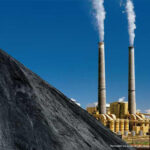
The CDE subsidized R$1.2 billion in 2025 for the purchase of coal, the most polluting source of electricity generation. The beneficiaries were the Jorge Lacerda Thermoelectric Complex (CTJL), in Santa Catarina (SC), which has a total installed capacity of up to 857 MW and is the largest coal-fired power hub in Latin America, composed of three plants (A, B, and C), and the Candiota III Power Plant (Rio Grande do Sul), with an installed capacity of 350 MW.
By propping up these aging facilities, public policy perpetuates a model that degrades river basins and ranks as the largest source of greenhouse gas emissions in the country’s power sector. These plants are the largest emitters of greenhouse gases in the national electricity sector and degrade the watersheds in these coal mining territories in Santa Catarina and Rio Grande do Sul.
The scale of this burden on the average citizen is growing. In late 2025, the National Electric Energy Agency (ANEEL) announced a preliminary budget for 2026 of R$52.7 billion—a 7% increase over the previous year (or R$49.2 billion). Currently, subsidies account for 18.53% of the average electricity tariff paid by Brazilians. While the CDE does fund essential social programs, it also ensures the artificial competitiveness of the domestic coal industry and the expansion of natural gas networks.
The Electric Energy Trading Chamber (CCEE) manages the CDE’s coal sub-account, which is designed to maintain the competitiveness of these plants through 2027 by utilizing domestic coal. According to Coal Monitor data, these mineral reserves are overwhelmingly concentrated in Rio Grande do Sul, which holds 92% of the total, primarily in the municipalities of Candiota, Pedras Altas, and Hulha Negra. The remaining supply is distributed between Santa Catarina (7%) and Paraná (1%).
Environmental Degradation Caused by Coal
The current regulatory framework of the CDE is quite narrow; in establishing the subsidies for the national coal sector, the legislation neglected to include environmental compensation measures or address the severe climate impacts generated by thermoelectric plants and the mining operations. This legislative oversight ignores the staggering scale of degradation as documented by the Federal Public Prosecutor’s Office (MPF) in Santa Catarina, where coal extraction has directly contaminated 26,500 hectares and indirectly impacted a 9,400 km² area, nearly 10% of the state’s total territory.
The most severe manifestation of this ecological crisis is Acid Mine Drainage (AMD), which has created a path of contamination extending across 1,200 km of rivers within the Tubarão, Urussanga, and Araranguá basins. This environmental catastrophe directly affects one million residents across 38 municipalities, marking it as the largest area of contamination caused by this activity in Latin America, as already reported since 2021 by the ARAYARA International Institute in the study: “THE TOXIC AND CRIMINAL LEGACY OF ENGIE – FRAM CAPITAL IN BRAZIL: A Map of the Contamination and Destruction Caused by the Jorge Lacerda Thermoelectric Complex and the Coal Mines that supply it”,
Due to the complexity and social, environmental, and economic relevance of coal contamination in Santa Catarina, since the early 1990s, the MPF has filed four major public civil actions (PCAs): the “Coal PCA”, in which the ARAYARA International Institute acts as amicus curiae; the Structural Safety PCA; the Gaspetro Landfill PCA; and the Verdinho Mine PCA.
However, the sector’s impact extends far beyond soil and water degradation; it remains a primary driver of air pollution. Studies by the ARAYARA International Institute and the Coal Observatory presented at COP30 in Belém emphasize that Brazil’s power system continues to operate using low-efficiency thermal plants using obsolete technologies, which rank among the nation’s largest greenhouse gas emitters. While the Jorge Lacerda Complex (SC), owned by Diamante Energia, has been operating for over 50 years, the Candiota III Plant (RS)—managed by Âmbar, an energy generation and trading company of the J&F Group—although inaugurated in 2011, perpetuates a history that began in 1961 with the former Candiota I. Despite their generational differences, both facilities share a common paradox: they consume vast amounts of public resources while generating less than 1% of the country’s electricity.
For the first time in the history of the Federal Legislature, the elimination of subsidies to the coal sector was the subject of a public hearing held in September 2025 at the Participatory Legislation Committee of the Chamber of Deputies. The debate was requested by Congresswoman Talíria Petrone (RJ), author of Bill No. 219/25, which proposes ending current incentives and prohibiting new subsidies for fossil fuels. In opening the hearing, the lawmaker emphasized the gravity of the situation: between 2020 and 2024, Brazil allocated an average of R$1.07 billion per year to coal, 4.5 times more than investments in renewable energy over the same period. “This situation contradicts the country’s climate commitments. Brazil needs to decide whether to move toward a clean energy matrix or continue supporting fossil fuels,” she stated.
Official reimbursement records from the CCEE confirm that the cost of this choice in 2025 alone reached R$ 1,223,799,417.91, with over 87% of these funds directed to the Jorge Lacerda Complex for coal purchases from seven mining companies, including Belluno, Carbonífera Catarinense, Metropolitana, Copelmi, Gabriella, Rio Deserto, and South Brasil.
Evidence of Illegal Coal Trading with CDE Resources
Beyond the environmental toll, evidence has emerged of illegal coal trading funded by CDE resources. In December 2024, acting on a formal complaint of environmental crimes, the Federal Police (PF) and the Federal Public Prosecutor’s Office (MPF) launched a joint operation at the Santana Mine, owned by Carbonífera Siderópolis Ltda. The investigation followed the company’s sale of coal to the Jorge Lacerda Thermoelectric Complex—a transaction subsequently covered by public CDE reimbursements.
Despite clear evidence that taxpayer-funded subsidies were being used to purchase coal from a site under criminal investigation, the ARAYARA International Institute’s formal alerts to the CCEE regarding these violations, but CCEE said that it is not within its powers.
According to a survey by the Coal Observatory, the amounts paid by the CDE to this mining company exceed R$26 million, of which approximately R$14 million —more than 50%—was disbursed in December 2024, the same month as the PF and MPF environmental crime operation.
Environmental Impacts, CO₂ Emissions, and Contradictions in Coal Energy Policy
According to the Greenhouse Gas Emissions Estimation System (SEEG), the city of Capivari de Baixo in Santa Catarina now leads all 5,570 Brazilian municipalities in CO2 emissions per square kilometer, a direct consequence of its coal-fired infrastructure. Furthermore, the long-standing argument that these subsidies are necessary to maintain regional employment is rapidly losing ground.
In May 2025, Indústria Carbonífera Rio Deserto Ltda. announced the closure of the Cruz de Malta Mining Unit in Treviso (SC), a move resulting in the dismissal of 200 workers and exposing the increasing fragility of the sector’s social justifications. Thus, it is clear that the subsidy allocated for the purchase of coal from CTJL does not guarantee the employment of workers in the coal industry in cases of layoffs, such as those that occurred in the municipality of Treviso, Santa Catarina. In other words, it does not comply with the guidelines of a Fair and Sustainable Energy Transition Program that includes workers.
The Candiota III Plant received more than R$154 million (12.61% of the coal sub-account subsidy), all directed to a single supplier: Companhia Riograndense de Mineração (CRM). CRM is a state-owned company linked to the Secretariat for the Environment and Infrastructure of Rio Grande do Sul (SEMA-RS)—a unique case globally, in which an environmental agency oversees a coal mining company. The situation is further complicated by the fact that SEMA-RS is responsible for both environmental licensing (through FEPAM) and drafting the State Plan for a Just Energy Transition for the state’s coal regions, scheduled for publication in February of this year.
Coal Subsidies, Environmental Liabilities, and Distortions in the Energy Transition
According to the study UTE Candiota 2050 – The Unsustainable Future of Subsidized Coal-Fired Electricity Generation by the ARAYARA International Institute, the state-owned mining company CRM has accumulated more than R$1.5 million in environmental fines imposed by FEPAM over the past eight years. These environmental crimes are primarily responsible for contaminating water resources and soil in the municipality of Candiota (RS) through acid mine drainage. In addition to this environmental impact, Candiota is the state’s largest greenhouse gas emitter, driven by the Pampa Sul and Candiota III coal plants.
Despite ceasing operation on December 31, 2024, due to expired contracts, the Candiota III plant inexplicably continued to draw R$13 million in monthly CDE subsidies. These payments only stopped in May 2025, following legal intervention by the ARAYARA International Institute. In June 2025, the plant announced that it would export electricity to Argentina. Furthermore, the facility operated only 236 days in the previous year—64.5% of the 366 days—yet received the full amount of coal sub-account CDE resources throughout 2025.
This context of an energy transition from coal to coal in Southern Brazil—a gateway region for extreme climate events—will persist until at least 2040, disregarding the environmental and climate issues raised by the ARAYARA International Institute and the Coal Observatory. This trajectory is reinforced by Law No. 15,269 of November 24, 2025, approved by President Lula after the insertion of pork barrel by the coal lobby into Provisional Measure 1304, which was originally intended to modernize Brazil’s power sector.
Additionally, in January 2026, the National Secretary for Energy Transition of the Ministry of Mines and Energy extended the concession of the Jorge Lacerda coal-fired power plant (SC) by 15 years, until 2040.
The measure, supported by Law No. 14,299/2022, aims to ensure jobs and energy security and to support a just energy transition—at an estimated annual cost of R$1.89 billion to Brazilian consumers. In other words, for just one coal plant, the “Mega da Virada”, a Brazilian lottery prize, was almost doubled in 2026.